
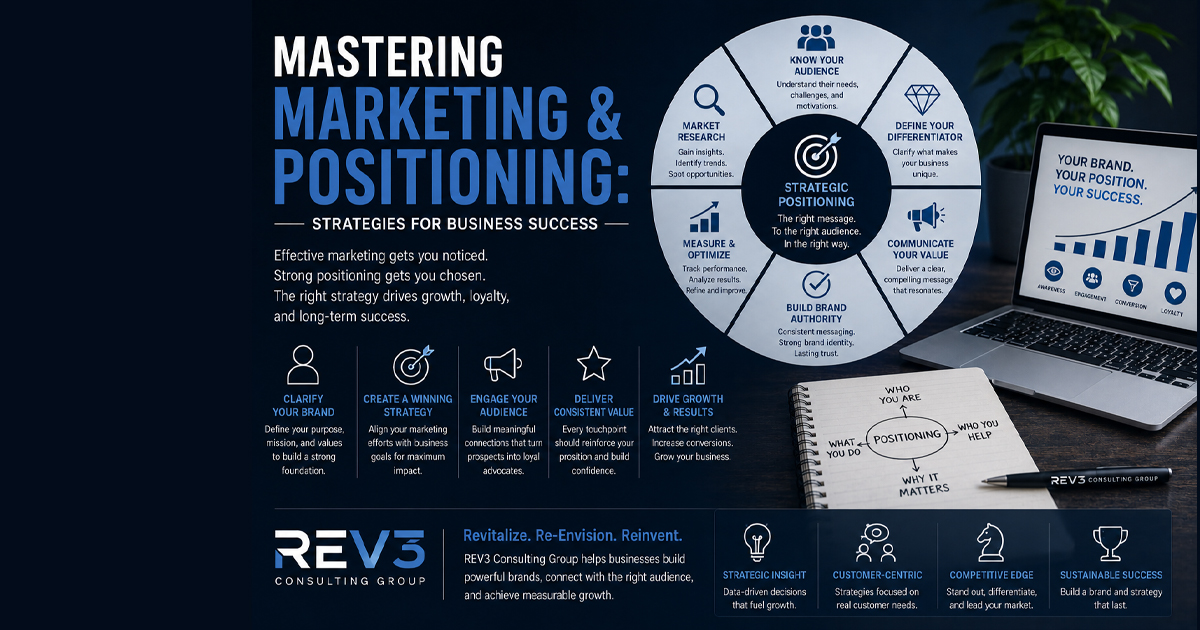


Mastering Marketing & Positioning: Strategies for Business Success
Understanding Marketing & Positioning
Marketing & Positioning are essential components of a successful business strategy. Marketing involves promoting your products or services to reach your target audience, while positioning defines how your brand is perceived in the marketplace relative to competitors.
Why Marketing & Positioning Matter
Effective Marketing & Positioning allow businesses to differentiate themselves, attract the right customers, and create lasting brand loyalty. Without a clear positioning strategy, even the best products can struggle to gain traction.
Key Elements of Successful Marketing & Positioning
- Identify Your Target Audience: Understand who your ideal customers are, their needs, and preferences.
- Define Your Unique Value Proposition (UVP): Clearly articulate what makes your product or service unique and why customers should choose you.
- Competitive Analysis: Study your competitors to find gaps and opportunities in the market.
- Craft a Compelling Brand Message: Communicate your UVP consistently across all marketing channels.
- Choose Effective Marketing Channels: Utilize platforms where your audience is most active, such as social media, email marketing, or content marketing.
Implementing Your Marketing & Positioning Strategy
To implement your strategy effectively, start by creating detailed buyer personas and mapping the customer journey. Develop content and campaigns tailored to each stage of this journey to nurture leads and convert them into customers.
Regularly review and adjust your positioning based on market feedback and changing consumer preferences. Staying flexible and responsive ensures your brand remains relevant and competitive.
Measuring Success
Track key performance indicators (KPIs) such as brand awareness, customer engagement, conversion rates, and sales growth. These metrics will help you evaluate the effectiveness of your Marketing & Positioning efforts and inform future strategies.
Conclusion
Mastering Marketing & Positioning is vital for business growth and sustainability. By clearly identifying your target audience, defining a unique value proposition, and consistently communicating your brand message, you can position your business for long-term success.
Frequently Asked Questions
What is the difference between marketing and positioning?
Marketing encompasses all activities involved in promoting and selling products or services, while positioning refers to how a brand or product is perceived relative to competitors in the minds of customers.
How can I identify my target audience for better positioning?
You can identify your target audience by researching demographic data, customer behaviors, preferences, and pain points, and by creating detailed buyer personas that represent your ideal customers.
Why is a unique value proposition important in marketing & positioning?
A unique value proposition clearly communicates what sets your product or service apart from competitors, helping to attract and retain customers by addressing their specific needs and preferences.